BIOCHAR
AN ANCIENT SOLUTION MAKING A MODERN COMEBACK
WHAT IS BIOCHAR?
Biochar isn’t new; in fact, it dates back more than 2,000 years to pre-Columbian communities in the Amazon. Scientists later discovered these areas of soil remained fertile for centuries, even without ongoing cultivation, thanks to the addition of charred organic material.
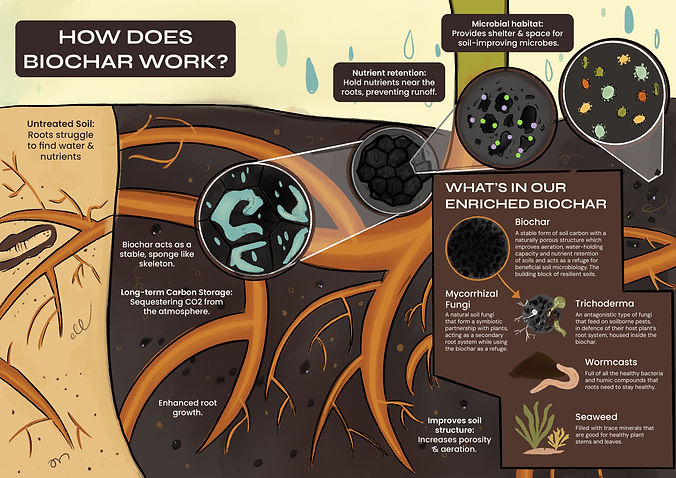
Biochar is created by heating natural plant matter in a low-oxygen environment, a process known as pyrolysis, which produces a stable, carbon-rich material. Because of its structure and purity, it doesn’t readily break down in the soil, meaning it provides a long-term, lasting improvement to soil health.
Biochar stores carbon in the soil rather than allowing it to return to the atmosphere as CO₂. That means while you’re making a lasting improvement to your soil, you’re also taking a positive step towards reducing your overall carbon impact.
Enriched biochar creates a permanent physical change in soil structure, improving aeration, water retention and nutrient availability. Its naturally porous, honeycomb-like structure provides a protective habitat for beneficial microbes, helping them remain active in the soil rather than being washed away by rainfall. It also acts like thousands of tiny reservoirs, holding moisture within the root zone so plants have access to water for longer — even during drier periods.
In short, biochar supports healthier plants while delivering real environmental benefits too.